
Vance Crowe
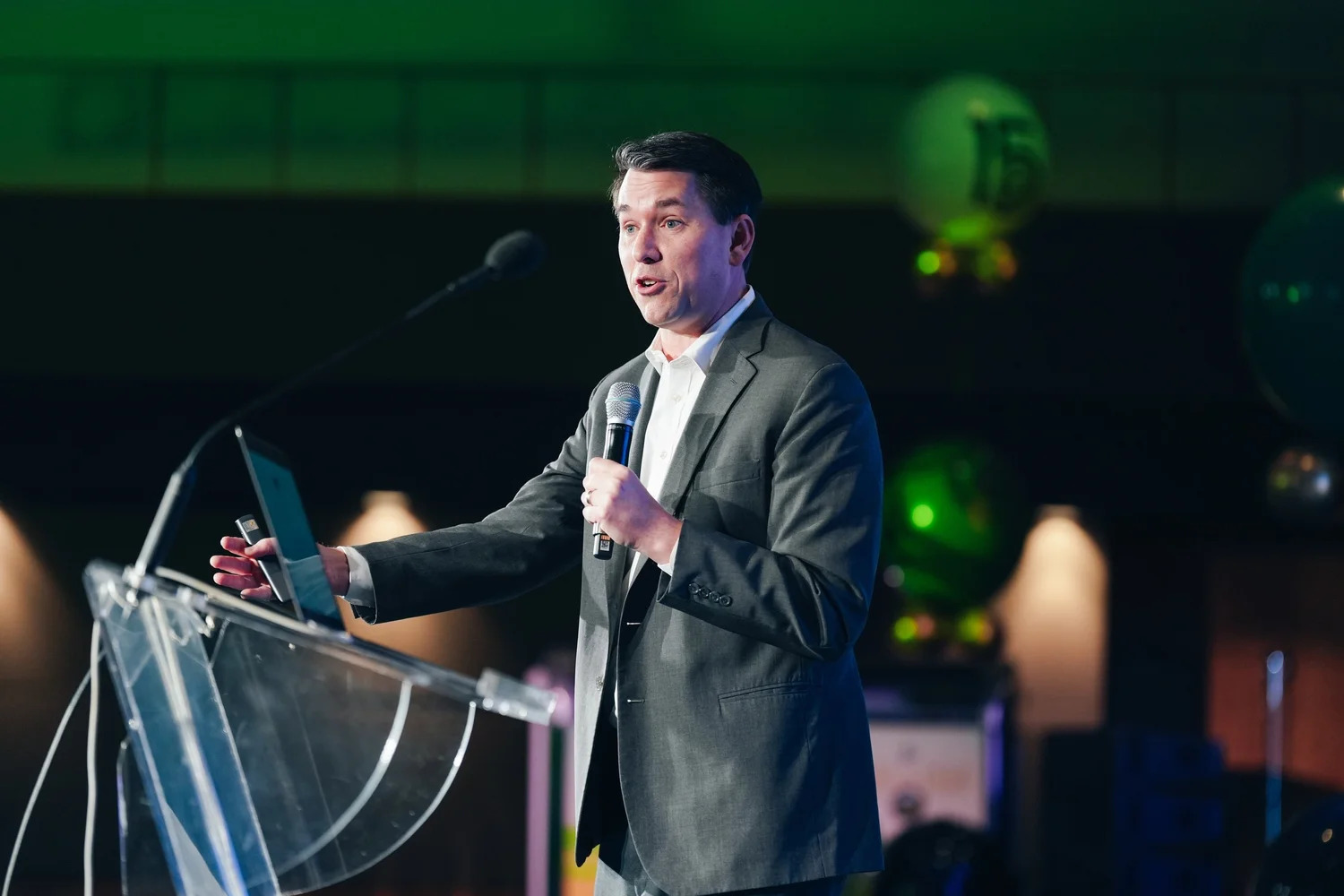
Communication strategist presenting new ideas in compelling and exciting ways that get audiences talking about how to change, improve and thrive in the age of acceleration.
Topic Categories:
Fee Range: Contact Speaker Exchange Agency
- Founder, Articulate Ventures
- Creator of Interest-Based Communication, a three-day course in St. Louis
- Master’s in cross-cultural negotiations, Seton Hall
- Director of Millennial Engagement, Monsanto, 2014 to 2019
- Spoken to more than 300,000 people in the US, Canada, and the UK
- Host, The Vance Crowe Podcast
*Fee ranges are presented as a guideline only. Speaker fees are subject to change without notice. For an exact quote, please contact your Speaker Exchange Agency representative.
Vance Crowe teaches highly logical people how to negotiate and communicate. He created Interest-Based Communication, a three-day course in St. Louis that draws on negotiation, storytelling, conversational skills, conflict resolution, and presenting. He holds a master’s in cross-cultural negotiations from Seton Hall. As Director of Millennial Engagement at Monsanto from 2014 to 2019, he was hired to put a human face on the most controversial company in agriculture. Before that he served in the Peace Corps in Kenya and worked as a Communications Strategist for the World Bank Group. He has spoken at MIT, UC Berkeley, and Iowa State, and for Bayer, PowerSouth Energy Cooperative, Farm Credit Mid-America, the Farm Credit Council, and AgWest Farm Credit. He has spoken to more than 300,000 people in the United States, Canada, and the United Kingdom. He hosts The Vance Crowe Podcast, runs Legacy Interviews from St. Louis, and is writing a book, Social Heuristics: Negotiation and communication skills for highly logical people, due fall 2027.
Advanced communication skills that prompt people to open up, share what they actually know, and bring problems to you earlier.
Ask someone “Why did you do that?” and you will get the first reason they can think of, usually something that makes them look good or keeps them out of trouble. Ask “How did you decide to do that?” and you get the story: what they saw, what they weighed, what they were reacting to.
The real reason is almost always in the details of the retelling. That one-word change is the thread this talk pulls on. Most people do not know why they do what they do. They are reacting to pressures they have not fully noticed, and a direct “why” invites them to defend a position rather than describe a path. Leaders who learn to ask “how” questions get honest answers, hear about problems before they become expensive, and build the kind of network that keeps them informed.
Vance Crowe teaches the listening and questioning techniques used by professional negotiators and interviewers to establish rapport, disarm defensiveness, and create the conditions where people tell you the truth. He has drawn these from recording hundreds of life stories through Legacy Interviews, from years of face-to-face engagement with critics of agriculture, and from a master’s degree in Cross-Cultural Negotiations.
The audience will learn:
How to frame questions so they get honest answers instead of defensive ones
Why “why” is the question that feels most direct and produces the shallowest answer, and what to ask instead How to find what the other person actually needs (their interest) rather than what they are asking for (their position), so agreements hold up
The common habits that break the flow of a conversation, and how to avoid them How to stay genuinely present so the other person feels heard, which is often the fastest way to change the dynamic in a hard conversation Who it’s for Leaders, managers, and professionals whose results depend on what other people are willing to tell them: executives who need their teams to surface problems early, farmers negotiating rent with landlords and succession with family, lenders and advisors who need the real story from across the desk, and anyone in a technical field who has good ideas and struggles to get buy-in.
Format Keynote, approximately 40 minutes plus 20 minutes of Q&A. Also delivered as a 60 to 90 minute workshop with practice exercises. Audiences describe it as practical, funny, and immediately usable; the “how versus why” reframe is the single idea people most often report back on weeks later. Delivered for American Feed Industry Association Executive Leadership Summit, Michigan Pork Producers Association, Canadian Association of Agri-Retailers, Compeer Financial GroundBreakers (2027), and others.
Where new ideas come from, and how to stand close enough to act on them.
The Edge of Chaos Where new ideas come from, and how to stand close enough to act on them. Every idea that will matter to your organization in five years is already out there. It is just rare, uncomfortable, and being talked about by people who sound a little crazy. That is what new ideas look like at the start. By the time one is comfortable enough to show up in the trade press, the value has mostly been spent. By the time your mother calls to ask about it after seeing it on cable news, there is nothing left to act on. Vance Crowe spent years as the public face of an industry that was being reshaped by ideas it did not see coming, and came out of it with a harder question than the one he went in with: where do the ideas that grip whole societies actually come from? The answer became this talk and a tool he draws on stage called the Well-Actually Graph. Every idea starts rare and valuable, then loses value as it spreads, and the people who profit are the ones who met it early, before it was safe. The place to meet it is the edge of chaos, the narrow zone between order and disruption. Builders, engineers, farmers, and accountants love the ordered side, and for good reason: nothing gets built in chaos. But nothing new comes from the ordered side either. The skill is living at the edge, fully engaged, learning things that are new while using skills you already have, and knowing how to get back home and do something productive with what you found. The audience will learn: Why disruption is not a threat that arrives randomly. It has a location, and you can stand closer to it The Well-Actually Graph: how an idea moves from rare and valuable to common and worthless, and how to read where any idea is on that curve How tribes carry ideas, and why the people bringing you the next one usually do not look credible yet How to tell the difference between change you should ignore and change your organization cannot afford to laugh at Why the most important protection against uncertainty is a network of people you respect and do not always agree with Who it’s for Boards, executive teams, lenders, and the leaders of organizations that have to plan on a five or ten year horizon while the ground moves underneath them. It is built for people who are good at the ordered side of their work and need a way to engage with the unknown without abandoning the discipline that made them good. Vance has delivered it for farm credit boards, cooperative leadership, grain and feed executives, and animal health industry leaders. Format Keynote, 45 to 60 minutes plus Q&A. Works as an opening session that frames a conference or as a closer that sends people home with a question. Can be paired with facilitated table discussion on where the audience’s own industry sits on the curve. Delivered for KC Animal Health Corridor Summit (August 2025), Next 5 Years Executive Summit (Fargo, September 2025), Bushel (June 2025), California Grain and Feed Association (May 2024), Farm Credit Council Services Director Leadership Conference (November 2023), Land Investment Expo (2020).
The art of passing down something you have built. The axe Vance’s father handed him has had the handle replaced twice and the head replaced once. Is it still his grandfather’s axe? It is, because what survives is not the wood or the steel. What survives is what the axe is for, and the family that keeps it swinging. Every farm, family company, practice, and institution faces the same question, and most of them get it wrong in the same direction. The founder demands that the next generation keep it exactly as it was. The next generation either waits, leaves, or takes it over and quietly resents the terms. The lawyers and accountants handle the paperwork and nobody handles the conversation. The thing ends up on the wall as a decoration, in a museum, or sold. Vance has recorded hundreds of people telling their life stories through Legacy Interviews, and the ones who built something all arrive at the same place: the hardest part of handing it down was never the assets. It was figuring out who could carry it, letting them change it, and finding a way to still matter once they did. This talk takes what those hundreds of stories have in common and turns it into a way for families and organizations to talk about succession that separates what must be preserved (the purpose, the identity) from what must be allowed to change (nearly everything else). The audience will learn: Why “keep it exactly as it was” is not preservation, and what the founder is actually afraid of when they say it How to tell the difference between the handle and the meaning: what in your operation is the steel and what is the story How to discover what the next generation actually wants, which is rarely what the older generation assumes How to hand down power in stages so new leaders grow into it instead of inheriting it cold Why the older generation often cannot let go until they have told their story, and how to create the room for that to happen What a matriarch or patriarch can change about how they communicate if the mentoring relationship never formed Who it’s for Family businesses, farm families, and the professionals who serve them: lenders, estate planners, wealth managers, and the associations and cooperatives whose boards and memberships are turning over a generation. It is written for the people who have spent a career building something and the people who are supposed to take it from them, and it works best when both are in the room. Format Keynote, 45 to 60 minutes plus Q&A. Pairs with a storytelling workshop that gives families a practical way to start the conversations the talk describes. Also runs as a two-part session with The Man on the Box. Delivered for Grain Farmers of Ontario March Classic (keynote plus workshop, March 2025), ARM Services (Wisconsin, January 2025), Oregon Seed Growers League annual meeting (December 2024), Montana Farm Bureau (November 2024).
Everyone who has ever been right and still lost the argument knows the feeling. The numbers were sound, the design was better, the recommendation was correct, and the room went the other way. It was not a data problem. Humans decide on story and use the facts to defend the decision they already made. The people who understand this are the ones whose good ideas actually get built.
The Man on the Box How to tell stories when the facts are on your side. Everyone who has ever been right and still lost the argument knows the feeling. The numbers were sound, the design was better, the recommendation was correct, and the room went the other way. It was not a data problem. Humans decide on story and use the facts to defend the decision they already made. The people who understand this are the ones whose good ideas actually get built. Vance Crowe learned it as the public face of the most attacked company in modern agriculture, where his job was to stand in front of people who had already decided he was lying. The story that changed how he did that job came from a market in Kenya during his Peace Corps years: a stranger in a brown suit who stood on a wooden box and sold a crowd on something that was not true, and did it better than any expert in the room could have sold the truth. This keynote is built in two halves. First, Vance tells that story the way he tells it on stage, with everything that makes a crowd lean in. Then he takes it apart in front of the audience: the structure, the moves, the choices, the moment the room turned. The audience leaves with two things. A working storyteller’s toolkit they can use the next morning with a client, a board, a regulator, a reporter, or their own team. And a diagnostic ear: the ability to tell where a decision is heading by listening to which stories are getting repeated. The audience will learn: Why the brain decides on narrative and rationalizes with data, and what that means for every conversation where you need someone to act on what you know What the man on the box understood about attention and emotion that the experts arguing against him did not The anatomy of a story that changes the mind of someone who walked in disagreeing with you A practical framework for telling your own story so that other people want to hear it, without becoming a salesman How to read the stories circulating around a decision or a controversy and know which way it is going to break Who it’s for Leaders and professionals who are usually right and tired of it not being enough: engineers, finance and accounting teams, scientists, operators, and the executives who speak for an industry. It is especially useful for leadership summits where the people in the room are the ones who will have to make the case for what they do, inside their organizations and outside them. Vance has delivered it for agriculture, biofuels and energy, animal health, and food production audiences. Format Keynote approximately 40 minutes plus 20 minutes of Q&A. Works well as a closing session followed by facilitated table discussion. Also available as a workshop. Delivered for Next 5 Years Executive Summit (Fargo, September 2026), Loveland Products / Nutrien sales leadership (Cincinnati, July 2026), Oregon Seed Growers League annual meeting (December 2024), and agriculture leadership programs during Vance’s time at Monsanto.



Want to bring Vance Crowe to your next event? Please tell us a little about your event, and we will get back to you shortly!