
Warren Macdonald
Leadership begins where certainty ends.
Topic Categories:
Fee Range: Contact Speaker Exchange Agency
Warren Macdonald helps leaders and teams navigate uncertainty with greater clarity, confidence and adaptability. His work explores how the way we interpret what’s happening around us shapes what we see as possible—and how quickly certainty can close us off to possibilities we might otherwise miss.
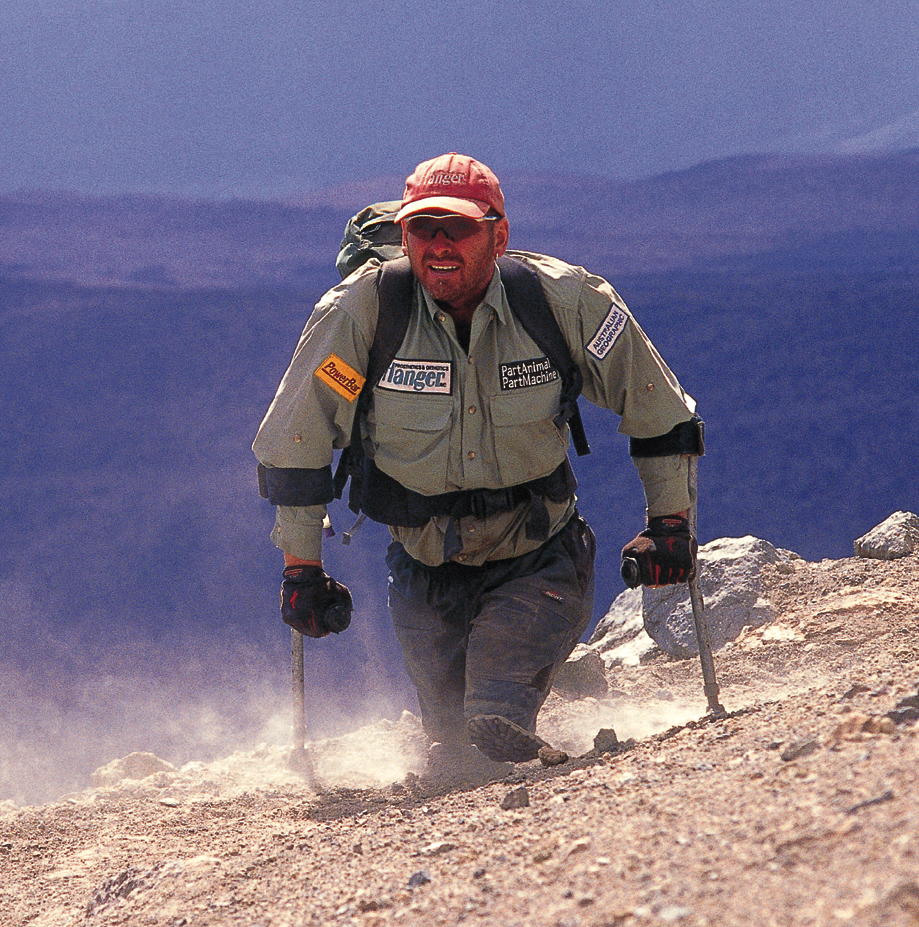
Warren’s perspective has been forged through experiences that have repeatedly tested his own capacity to navigate uncertainty and adapt. In 1997, while climbing on Australia’s Hinchinbrook Island, he became trapped beneath a one-ton boulder for two days. His rescue was followed by the amputation of both legs above the knee and the beginning of an extraordinary process of rebuilding and adaptation.
Today, Warren brings those experiences together with more than two decades on stages around the world to explore a deceptively simple idea: Leadership begins where certainty ends.
*Fee ranges are presented as a guideline only. Speaker fees are subject to change without notice. For an exact quote, please contact your Speaker Exchange Agency representative.
Warren Macdonald knows what it means to face a future that looks nothing like the one you expected—and find a way forward when the way forward isn’t clear.
In April 1997, while climbing on North Queensland’s Hinchinbrook Island, Warren became trapped beneath a one-ton boulder in a freak rock fall. He remained trapped for two days before being rescued and ultimately underwent the amputation of both legs above the knee.
Just ten months later, he climbed Tasmania’s Cradle Mountain using a modified wheelchair and the seat of his pants.
In 2003, Warren became the first double above-knee amputee to reach the summit of Africa’s highest mountain, Mt. Kilimanjaro. Later that year, he climbed El Capitan in Yosemite National Park in an extraordinary four-day effort requiring more than 2,800 pull-ups. He has also climbed Canada’s 600-foot frozen Weeping Wall and undertaken expeditions in some of the world’s most challenging environments.
His bestselling book, A Test of Will, was the basis for the Trapped Under a Boulder episode of Discovery Channel’s I Shouldn’t Be Alive. His documentary The Second Step, chronicling a four-week journey to Federation Peak in Tasmania, screened on National Geographic Television and won eight international awards, including Grand Prize at the Banff Mountain Film Festival.
Warren has appeared on numerous television and current-affairs programs, including Larry King Live, The Oprah Winfrey Show and The Hour with George Stroumboulopoulos.
For more than two decades, Warren has brought those experiences to stages around the world, helping leaders and teams navigate adversity, change and uncertainty. His work explores the role perception plays in shaping how we respond when circumstances change—and what becomes possible when we challenge the assumptions that can limit what we see.
Today, that work is expressed through The Perception Gap: the space between what we believe something means and what else might be possible.
Through powerful storytelling and practical insight, Warren challenges audiences to move forward without waiting for certainty—to see more clearly, build confidence in their capacity to navigate unfamiliar terrain, and adapt how they operate when circumstances change.
Leadership begins where certainty ends.
Warren lives in the Canadian Rockies with his partner, Margo Talbot.
We are living and working through a period of extraordinary volatility and change. Technology is reshaping how we work, familiar assumptions are being challenged, and increasingly, leaders and teams are being asked to move forward without knowing exactly what comes next.
The more uncertain our environment becomes, the stronger our instinct can be to reach for certainty.
We decide what something means. We fall back on familiar assumptions. We respond from scripts that have worked before—often without realizing we’re doing it.
The problem isn’t that our first interpretation is necessarily wrong. It’s that we can become certain of it too quickly, and miss potential possibilities.
Warren Macdonald calls the space between what we believe something means and what it could mean The Perception Gap.
Drawing on experiences that have repeatedly tested his own capacity to navigate profound uncertainty and adapt—from losing both legs in a backcountry accident to undertaking expeditions in some of the world’s most challenging environments—Warren explores what becomes possible when we learn to recognize that Gap before certainty closes it.
Our first interpretation arrives automatically. The opportunity is to catch it—to notice when the tape starts running—and remain curious long enough to ask:
How am I seeing this? What might I be missing? Is there more to see?
That doesn’t remove uncertainty. It changes our capacity to navigate it.
Through powerful storytelling and practical insight, The Perception Gap challenges audiences to recognize the assumptions shaping what they see, discover possibilities they might otherwise miss, and move forward without waiting for certainty to arrive.
Part of that challenge is to disrupt yourself first: question the assumptions, habits and ways of operating that keep us anchored to what worked before circumstances force the issue.
Because perception doesn’t change the facts. It changes what we believe those facts have to mean.
The result is greater clarity about what may be possible, greater confidence in our ability to move through unfamiliar terrain, and greater adaptability in how we respond to the reality we’re facing.
Audience Takeaways
- Recognize when “the tape starts running.” Develop greater awareness of the automatic assumptions and interpretations that shape how we respond to uncertainty—often before we realize they’re operating.
- Stay curious before certainty closes the Gap. Learn to recognize the Perception Gap and resist the instinct to decide too quickly what something means, creating room for curiosity and possibilities that might otherwise be missed.
- Move forward without waiting for certainty. Develop greater clarity and confidence in unfamiliar terrain by focusing less on predicting what comes next and more on our capacity to navigate it.
- Adapt how we operate when circumstances change. Disrupt yourself first: challenge assumptions, make more intentional choices, and respond to the reality we’re facing rather than remaining locked into approaches that worked in the past.
Experience is invaluable. It gives us the confidence to make decisions, solve problems and act without having all the answers.
But experience can also become a constraint when we mistake what worked before for what must work next.
In times of uncertainty, our instinct is to rely on what we know; to interpret new situations through old assumptions and respond in familiar ways. Often that works.
Sometimes it doesn’t.
Disrupt Yourself First is about recognizing those moments and creating enough space between what happens and how we respond to choose something different.
Drawing on nearly three decades of navigating uncertainty and environments not designed for him, Warren Macdonald shows audiences how to interrupt automatic responses, question the assumptions shaping what they see, and move forward without waiting for certainty.
Self-disruption isn’t about rejecting experience. It’s about staying willing to challenge it.
Because when circumstances are changing, one of our greatest advantages is the ability to change how we respond before change makes that decision for us.
Expected Outcomes
Audiences leave better equipped to recognize when they’re operating from assumption rather than choice.
They’ll learn how to interrupt automatic responses, ask better questions and take purposeful action when the way forward isn’t clear—using experience as a foundation without allowing it to become a boundary.
Key Takeaways
- Recognize when experience is informing your decisions—and when it’s limiting what you can see.
- Learn to create space between what happens and how you respond, interrupting automatic reactions before they become decisions.
- Use simple questions—“How can I see this?” “What am I missing?”—to challenge your first interpretation and reveal other possibilities.
- Understand why action doesn’t require complete certainty—and how to move forward when you know enough, rather than waiting until you know everything.
- Build greater capacity for uncertainty by deliberately moving beyond what’s familiar.
- Develop self-disruption as a practice: challenge your assumptions before circumstances challenge them for you.
We tend to think of resilience as something we need when things go wrong; the ability to recover, regroup and bounce back.
But resilience isn’t something we suddenly find when we need it. It’s something we build before we need it.
Drawing on lessons learned through extraordinary adversity and nearly three decades of navigating a world not designed for him, Warren Macdonald challenges audiences to see resilience differently: not as a personality trait, but as a practice.
Every time we navigate uncertainty, move beyond what’s comfortable, adapt when the plan changes, or take action without having all the answers, we’re building capacity. We’re making deposits into what Warren calls our resilience bank account—capacity we can draw on when the stakes are higher and the challenges are no longer optional.
The process begins with three deceptively simple steps:
Acceptance. Responsibility. Action.
- Accepting the reality we’re facing without accepting that it defines what’s possible.
- Taking responsibility for what remains within our control.
- And taking the next action that moves us forward.
Return on Resilience gives people a practical way to build that capacity deliberately; to expand the circle of what they know they can handle.
Because bouncing back is just the beginning. The real return on resilience is becoming more capable because of what you’ve been through.
Expected Outcomes
Audiences leave with a different understanding of resilience; not simply as the ability to withstand adversity, but as capacity that can be deliberately developed.
Warren gives people a practical framework for navigating challenge and uncertainty: accepting what is, identifying what remains within their control, and taking purposeful action even when the entire path forward isn’t clear.
The result is a shift from: “Can I handle this?” to:
“I’ve handled hard things before. What’s the next step?”
Key Takeaways
- Understand why resilience is a practice; something we build before we need it.
- Learn Warren’s Acceptance → Responsibility → Action framework for moving forward when circumstances change.
- Discover how resilience can be banked, and how capacity built through one challenge becomes available when facing the next.
- Recognize the difference between accepting reality and accepting a limiting interpretation of what’s possible.
- Learn how deliberately navigating uncertainty and discomfort expands the circle of what we know we’re capable of.
- Move beyond “bouncing back” and use challenge to build greater capacity for whatever comes next.
your team from “I can’t” to “Bring it!” To instill the understanding that by facing our challenges; seeking them out even, we build the strength and resilience required when bigger problems come our way.
Key Takeaways
- An understanding of how resilience is banked, and is transferable across all areas of our lives.
- Specific tools and techniques to build resilience.
- Learn that “Bouncing Back” is just the beginning. By practicing resilience, we position ourselves to Bounce Forward towards our goals.
Change disrupts more than our plans. It disrupts our assumptions about how things are supposed to work.
When Warren Macdonald lost both legs above the knee, his world changed overnight. His physical comfort zone; the world he knew how to navigate; collapsed to almost nothing.
Getting his life back wasn’t about returning to the way things were. It was about pushing the boundaries of his world outward again, one step, one challenge and one decision at a time.
That’s the challenge of change.
When circumstances shift, we naturally look at the new reality through the lens of what worked before. But accepting that reality doesn’t mean accepting our first interpretation of what’s now possible.
In The Challenge of Change, Warren shows audiences how to recognize the assumptions that keep us stuck, focus on what remains within our control, and move forward without waiting for certainty.
Because when the old way no longer works, the most useful question isn’t:
How do we get back to where we were?
It’s: What becomes possible from here?
Expected Outcomes
Audiences leave with a practical way to navigate change: accept what is, question what you think it means, and take the next useful action.
They’ll learn how to recognize when old assumptions are limiting new possibilities, move beyond the need for certainty, and deliberately expand the boundaries of what they believe they can handle.
Key Takeaways
- Recognize the assumptions and mental barriers that can keep us stuck when circumstances change.
- Separate what has actually changed from what we’ve decided that change means.
- Learn to move forward without waiting for certainty or a complete plan.
- Focus energy and attention on what remains within our control.
- Understand how deliberately navigating challenge expands our capacity for whatever comes next.
- Ask a more useful question when the old way no longer works: “What becomes possible from here?”
It’s all well and good to set seemingly impossible goals; the kind that has your team looking at you like you’re nuts. Like this time you’ve really lost it . . . You need them to see what you see. You need to convince them, to inspire your team to follow you. To show them what is possible when you’re prepared to go One Step Beyond…
Beyond ordinary
Beyond conventional
Beyond perceived limitations
Expected Outcomes
You can expect your team to become engaged in raising the performance bar. Carol Gardibie sums it up best in her testimonial below.
Key Takeaways
- Reinforced understanding of the power of purpose, i.e.: when we have purpose, we have an edge…
- The ability to see obstacles as stepping-stones toward our goals.
- A clear understanding of the importance of preparation in reaching your goals.



Want to bring Warren Macdonald to your next event? Please tell us a little about your event, and we will get back to you shortly!