
Josh Morris
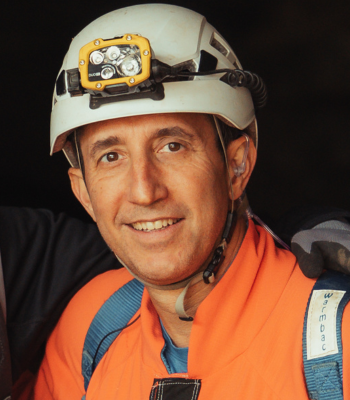
Illuminating the possibilities of human potential, in the moments when the path forward is still in the dark.
Topic Categories:
Fee Range: Contact Speaker Exchange Agency
The rescue: Lead international coordinator and government liaison, 2018 Tham Luang cave rescue, between the international divers, the US Air Force Pararescue Specialists and senior Thai authorities
Recognition: Knight Commander 2nd Class, conferred by the King of Thailand
On screen: Featured throughout The Rescue, the National Geographic and Disney+ account of the operation
Day job: Founder and CEO of Progression, Chiang Mai. More than forty full-time staff running climbing, caving and leadership programs across Asia since 2002
Also: Advisor, Thailand National Cave Committee. Princeton graduate, in Thailand since 1999
Speaks: English and Thai, to audiences of ten to eight hundred
Clients: Adidas, Invisalign, YPO, Entrepreneurs’ Organization, ESOMAR, AbbVie, Novant Health, Envision Healthcare, Vantive, EGO Pharmaceuticals, BMW, Kantar, GIC, Solvay, Willis Towers Watson
*Fee ranges are presented as a guideline only. Speaker fees are subject to change without notice. For an exact quote, please contact your Speaker Exchange Agency representative.
Josh Morris is the founder and CEO of Progression, a Chiang Mai company of forty full-time staff and more than sixty contractors, running climbing, caving and leadership programs across Asia for businesses, schools, NGOs and governments.
A Princeton graduate, he arrived in Thailand in 1999 on a one year placement, intending to apply to medical school afterwards. He stayed. In 2002 he co-founded Chiang Mai Rock Climbing Adventures, which grew into Progression, and has spent the years since building a business in a country that is not his own, in a language he had to learn. His team has developed more than three hundred climbing routes at Crazy Horse Buttress and opened climbing and caving areas across northern Thailand. He advises the Thailand National Cave Committee on cave management and cave tourism, and he works in Thai and English.
That work is the ground everything else stands on. Building a company across a cultural and linguistic divide taught him what it takes to earn trust rather than assume it, and how to move a group that shares no first language and no chain of command.
In July 2018 it was tested in public. Twelve boys and their soccer coach were trapped 2.5 kilometers inside a flooded cave in Northern Thailand. On 6 July, Josh walked into a military briefing room to discuss water diversion. What he found there was a gap: an international group of divers and specialists on one side, a Thai command structure on the other, and no reliable way to move information between them. Within hours he was chief international coordinator and government liaison between the international divers, the US Air Force Pararescue Specialists and senior Thai authorities. It was through that channel that the divers were granted permission to attempt the rescue. Eighteen days later, all thirteen exited the cave alive, because committed rescuers from seventeen countries came together, each with unique skill sets, and together innovated to achieve something that had never been done before.
Josh was awarded Knight Commander 2nd Class by the King of Thailand for his role, and appears throughout The Rescue, the National Geographic and Disney+ account of the operation.
He has spoken for more than ten years at events of all sizes, from a small boardroom to a conference hall of 900, for organizations including adidas, YPO, the Entrepreneurs’ Organization, ESOMAR, AbbVie, BMW and Kantar. He works by putting an audience inside a real decision rather than by telling them what to conclude, building each talk to align with the theme of the event where he is speaking.
The 2018 Tham Luang rescue told from inside the operation, not as the world watched it but as the people in the room actually decided it.
In July 2018 the world watched an impossible rescue unfold in Northern Thailand. Josh was inside it, coordinating between the international divers, US Pararescue and Thai command. He tells it from that vantage point: what was known, what was still being guessed at, who was actually deciding, and what it felt like to be in a military briefing room with no good options left. Early in the talk he stops and hands the audience a question of their own, because the story lands differently once people are holding something they cannot yet see the end of. The themes are the ones the operation demanded: continuous learning and preparation, influencing beyond traditional hierarchies, building trust at speed, decision-making in crisis, and the willingness to take a calculated risk. Audiences leave with a way to talk about acting before the path is clear.
How leaders commit when the data is incomplete, the options are all imperfect, and waiting is itself a decision.
Most leadership training assumes a decision has a right answer waiting to be found. The harder and more common case is the one where several options are defensible, none is obviously correct, and the cost of delay is rising. That was the position at Tham Luang, and it is the position leadership teams occupy during a launch, a restructure or an entry into an unfamiliar market. Josh works through how hesitation actually forms, where alignment breaks down, and how to build commitment and buy-in without complete information. He draws on the rescue and on twenty years of decisions made in his own company. Audiences leave able to name the decision in front of them, identify what is genuinely unknowable, and move anyway.
What it takes to earn trust, influence and alignment among people who share no first language, no employer and no chain of command.
At Tham Luang, teams from seventeen countries solved a problem together that none could have solved alone. They shared no common language, but they did share a common rescue language, and that turned out to be decisive. Josh has spent more than two decades leading in a culture that is not his own, in a language he had to learn, and he speaks about intercultural effectiveness as a practitioner rather than a theorist. The session works with concepts from Erin Meyer’s culture map and asks the audience to see their own culture clearly enough to work well with people who do not share it. Audiences leave with a sharper sense of how they are read by others, and how to adapt without losing themselves.
Why the capability that matters most is almost always acquired long before anyone can see what it is for.
Nothing in eighteen years of cave exploration, in learning Thai, or in building a company across a cultural divide looked like preparation for a flooded cave in July 2018, and none of it could have been acquired once the moment arrived. Josh makes the case that the work which ends up mattering rarely announces itself in advance, that influence is earned through capability rather than granted by position, and that failure is more useful treated as information than as a verdict. It is an argument for continuous learning grounded in two decades of accumulating skills with no obvious return at the time. Audiences leave with a sharper reason to keep building something they cannot yet justify.




Want to bring Josh Morris to your next event? Please tell us a little about your event, and we will get back to you shortly!